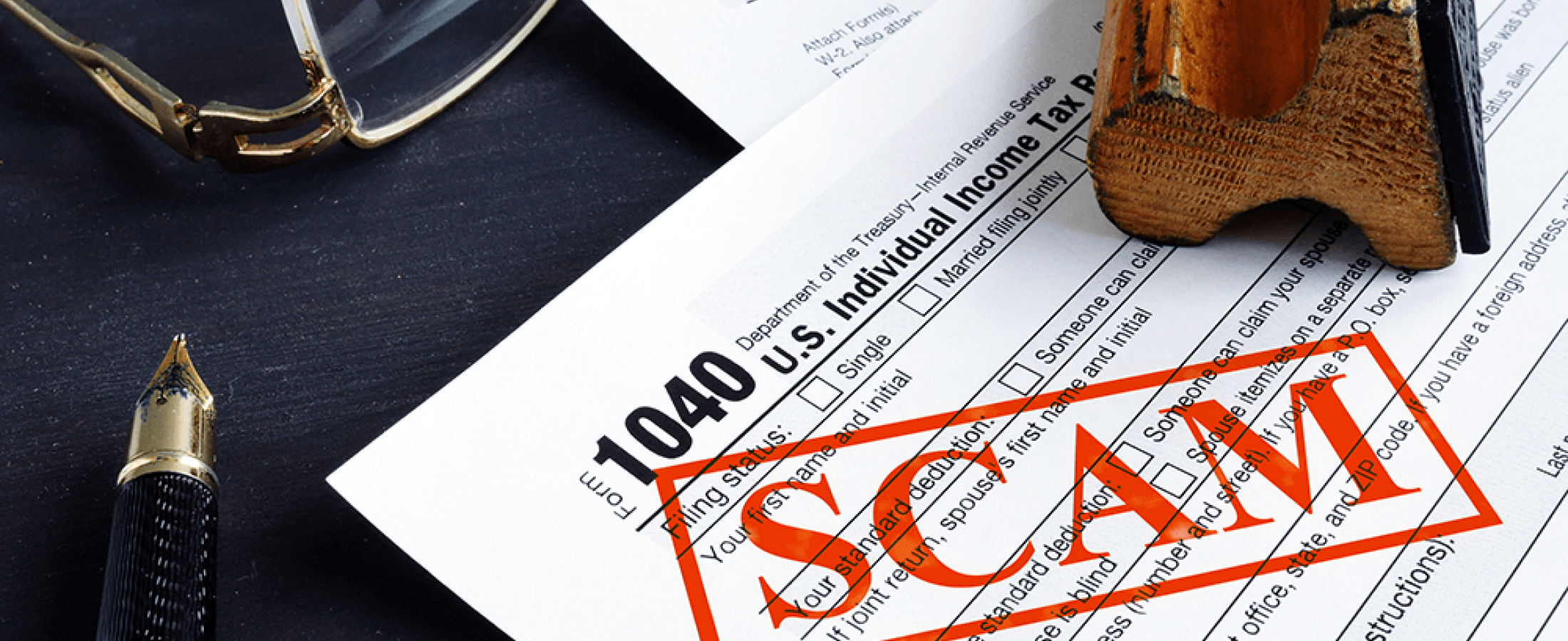
Protect Your Finances: Spotting Tax Fraud Before It’s Too Late
With tax season in full swing, criminals are ramping up to target people into sharing sensitive and personal information to falsify tax returns to steal money. Watch out for big paydays, threats, demands, and harmful website links in these common tax scams.
Recognizing Common Tax Scams
Dishonest tax preparers: A fraudulent professional may falsify returns, steal refunds, or claim fake credits/deductions. They may use “ghost preparer” tactics to file returns without your permission or knowledge, sign blank returns, or even charge fees based a percentage of your refund.
Seniors targeted: Seniors may be trusting, less tech-savvy, and financially stable, making them targets for stealing personal information or money. Criminals impersonate government officials such as IRS agents while using fear tactics for immediate payment, tech support, or social media influence. They may use threats such as arrest or deportation to get seniors to quickly pay via gift cards or wire transfers. Official-looking emails or text linked to malicious sites, infected computer pop-ups or calls, and bad advice on social media can mislead seniors to give up sensitive information.
Social media bad tax advice and scams: Fraudsters promote false credits, encourage fake W-2s for large refunds, and offer “too good to be true” schemes. This leads followers to file incorrect tax returns and face IRS penalties, often using social media for phishing and immediate payment. Scammers may also offer advice to ignore any official IRS communications or respond with false information.
Tax debt settlement or relief services: Scammers use high-pressure tactics to promise to reduce or eliminate IRS debt for a large payment. They may tell you to stop paying the IRS, leading to more penalties or errors.
Unemployment claims: Your stolen personal information is used for fake unemployment claims for benefits you never filed. This could lead to tax issues, financial problems, and a lack of proof you weren’t an applicant.
Unexpected tax bill: Scammers use phone, email, or text to impersonate the IRS or a state agency to claim you owe back taxes and demand immediate payment. Threats may be made and specific methods of payment are required such as wire transfer or gift cards. The goal is to steal your money or personal information. An initial contact method is the key red flag — the IRS always notifies you first by mail, not by phone or email.
W-2 Form fraud: Criminals trick employers into sending W-2 forms with sensitive information such as names, addresses, and Social Security numbers to file fake returns for large refunds.
Acting Immediately
If you’re a victim of a tax scam, make sure to take steps to secure your personal and financial information. You must immediately:
- Stop all contact with the scammer
- Stop providing any more money or personal information
- Contact your financial institution if you have shared personal information and sent money
- Monitor your accounts and review your credit reports
- Contact each credit bureau (Experian, TransUnion, and Equifax) to place a credit freeze on your credit reports. You only need to contact one credit bureau to place a fraud alert
Reporting the Scam and Identity Theft
After taking immediate action, you must alert the necessary authorities about the incident. They can help use your information to build a case against scammers and can protect others from becoming victims. You should:
- Report to the Federal Trade Commission (FTC).
- Contact the IRS.
- If you receive a letter about suspected identity theft, follow the instructions
- You may file a report for tax fraud, identity theft, fraudulent IRS impersonations, and even fraudulent tax return preparers
- To take action on specific scams, the IRS provides more details on the steps to follow, including forms and contact information
- File a report with your local police department. Keep a copy for your records just in case the IRS or other agencies need it
- Notify your state tax agency. The New York Department of Taxation and Finance provides contact information to file any concerns or suspicious activity.
Preventing Tax Scams
To avoid falling victim to tax scams, make sure to protect your personal information and use secure ways to file your taxes:
- File your tax return as soon as you have all your necessary documents
- Get an Identity Protection (IP) PIN annually from the IRS when filing tax returns
- Shred old tax documents and secure sensitive information
- Don’t carry your Social Security card
- Protect your devices and accounts with strong passwords, multi-factor authentication, software updates, and secure Wi-Fi
- Don’t open or click on any links in suspicious emails or text messages
- Keep all documentation related to the scam if you become a victim
Protecting Yourself and Your Information
For useful tools with real-time alerts to help you guard against fraud, check out our Fraud Protection section. Adirondack Bank has many options to protect your personal or business accounts, including CardGuard and Positive Pay.
The information in this article was obtained from various sources not associated with Adirondack Bank. While we believe it to be reliable and accurate, we do not warrant the accuracy or reliability of the information. Adirondack Bank is not responsible for, and does not endorse or approve, either implicitly or explicitly, the information provided or the content of any third-party sites that might be hyperlinked from this page. The information is not intended to replace manuals, instructions or information provided by a manufacturer or the advice of a qualified professional, or to affect coverage under any applicable insurance policy. These suggestions are not a complete list of every loss control measure. Adirondack Bank makes no guarantees of results from use of this information.